By K.A. Powell • Biographies & Frontier Profiles
The history of the American frontier is rarely a straight line of unbroken successes. More often, it is a testament to calculated pivots, deep resilience, and the willingness to rebuild when the winds of fortune change. Few lives in early Missouri history embody this spirit more fully than that of James W. A. Patterson. From a young apprentice learning a grueling trade to a distinguished civic voice in the halls of the state legislature, his journey mirrors the growth of the very communities he helped establish.
Through primary documentation, property deeds, and family ledgers, we can look past the dry dates on a page to reconstruct a life marked by agricultural influence, political service, and an enduring familial legacy.
Listen to the Episode
From the Bluegrass to the Boon’s Lick: Ancestry and Migration
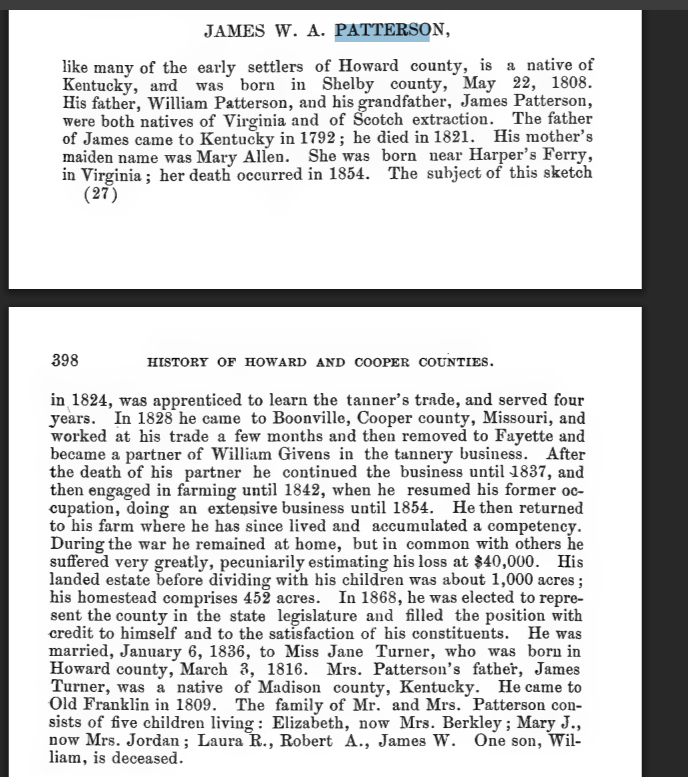
The roots of the Patterson lineage reach back across the Atlantic to Scotland, winding through the early settlements of colonial Virginia before anchoring in the rich soil of Kentucky. It was there, amidst the rapidly expanding settlements of the late frontier era, that James W. A. Patterson was born.
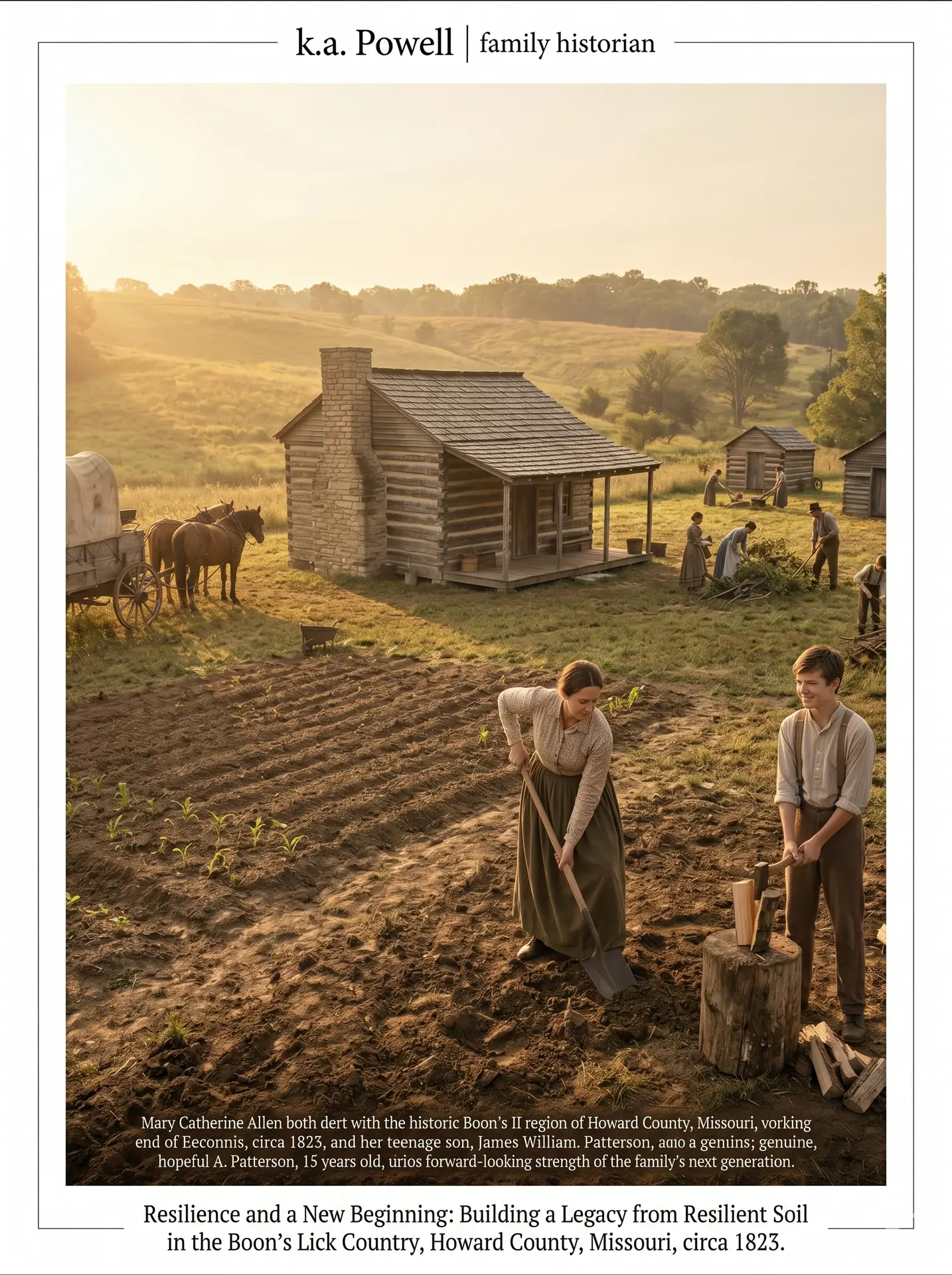
However, the family’s ties to Kentucky were destined to be severed by necessity and shifting opportunities. In 1828, looking toward the burgeoning promise of the western territories, the family joined the great westward migration. Traveling along rugged trails with their possessions, they crossed into Missouri, choosing to settle in Cooper County. Arriving during a pivotal era of local development, they found a landscape of rolling hills and rich bottomlands that was highly conducive to both agricultural production and community building. For the young Patterson, this transition from the established infrastructure of Kentucky to the raw potential of Missouri would define the trajectory of his adult life.
The Tanner’s Craft and Land Ownership
Upon establishing himself in Cooper County, Patterson did not immediately rely on large-scale farming. Instead, he entered into a rigorous professional apprenticeship to master the trade of a tanner. In the 19th century, tanning was an essential frontier industry; leather was required for everything from harness rigging and saddles to footwear and machinery belts. The work was demanding, requiring a deep understanding of chemical processes, woodcraft (for gathering specific tree barks used in the tanning liquors), and sheer physical endurance.
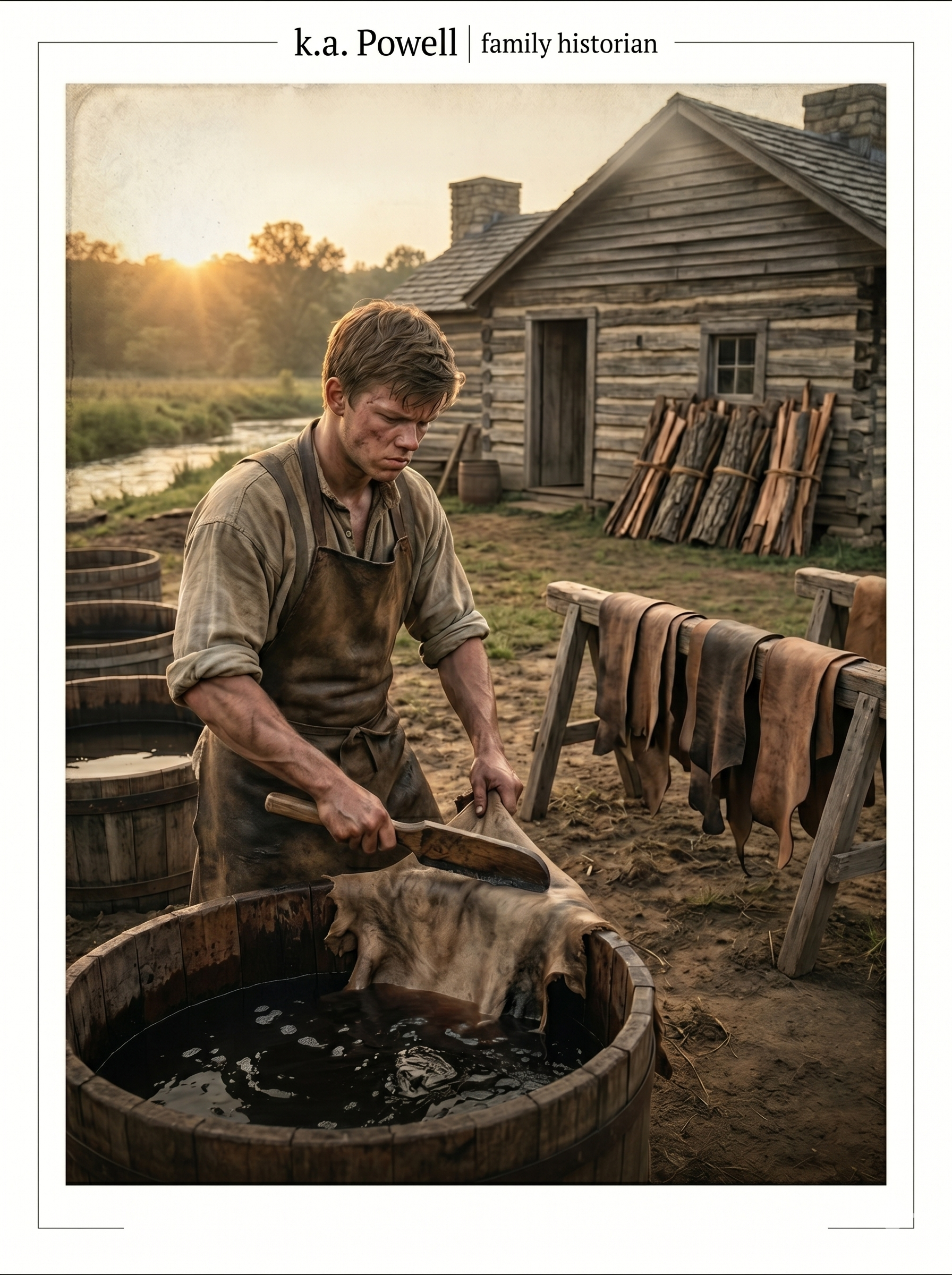
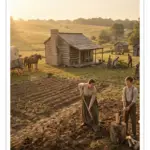
Patterson’s mastery of the craft provided the financial foundation he needed to secure his true passion: land ownership. As his business grew, he systematically reinvested his earnings into the soil, acquiring substantial property holdings across the county. He transitioned into a prominent landowner and agriculturalist, utilizing progressive farming methods of the era to transform raw acreage into a highly productive estate. By middle age, his agricultural footprints were firmly established, and he was regarded as a pillar of the local economic community.
Wartime Hardships and Political Resilience
No frontier success story was immune to the catastrophic disruptions of the mid-19th century. The outbreak of the Civil War brought immense instability to Missouri, a deeply divided border state. Patterson’s estates and financial holdings suffered severe hardships during the conflict, as shifting military occupations, guerrilla warfare, and economic inflation devastated local commerce.
Yet, true to the resilient nature that characterized his early life, Patterson refused to be defeated by financial ruin. As the dust of the war settled, he turned his attention toward civic healing and reconstruction. Recognizing that a community cannot rebuild without strong, steady leadership, he entered the political arena.
His reputation for integrity and deep-rooted local knowledge resonated with a population eager for stability. Patterson was elected to the Missouri State Legislature, where he served with distinction. In the capitol, he advocated for infrastructure development, agricultural protections, and policies aimed at restoring the economic vitality of rural communities. His transition from a private landowner to a public statesman marked the pinnacle of his civic influence.
An Enduring Lineage
Beyond the legislative record and the ledger books of his tanning business, James W. A. Patterson’s most lasting contribution remains the family legacy he left behind. His property holdings, carefully managed and expanded throughout his lifetime, served as an anchor for subsequent generations, ensuring his descendants maintained a position of standing and influence within the local community.
As family historians, reconstructing the biography of an individual like James W. A. Patterson allows us to see how individual choices interact with macro-historical events. He was not merely a passive observer of Missouri’s golden age of growth; he was an active architect of it—shaping the land with his hands, the economy with his trade, and the law with his voice.
Post Disclaimer
Disclaimer This blog is a personal project and is for informational purposes only. It is not intended to serve as a definitive legal or historical record for anyone other than myself.


Leave a Reply