The Burden of the Unwritten
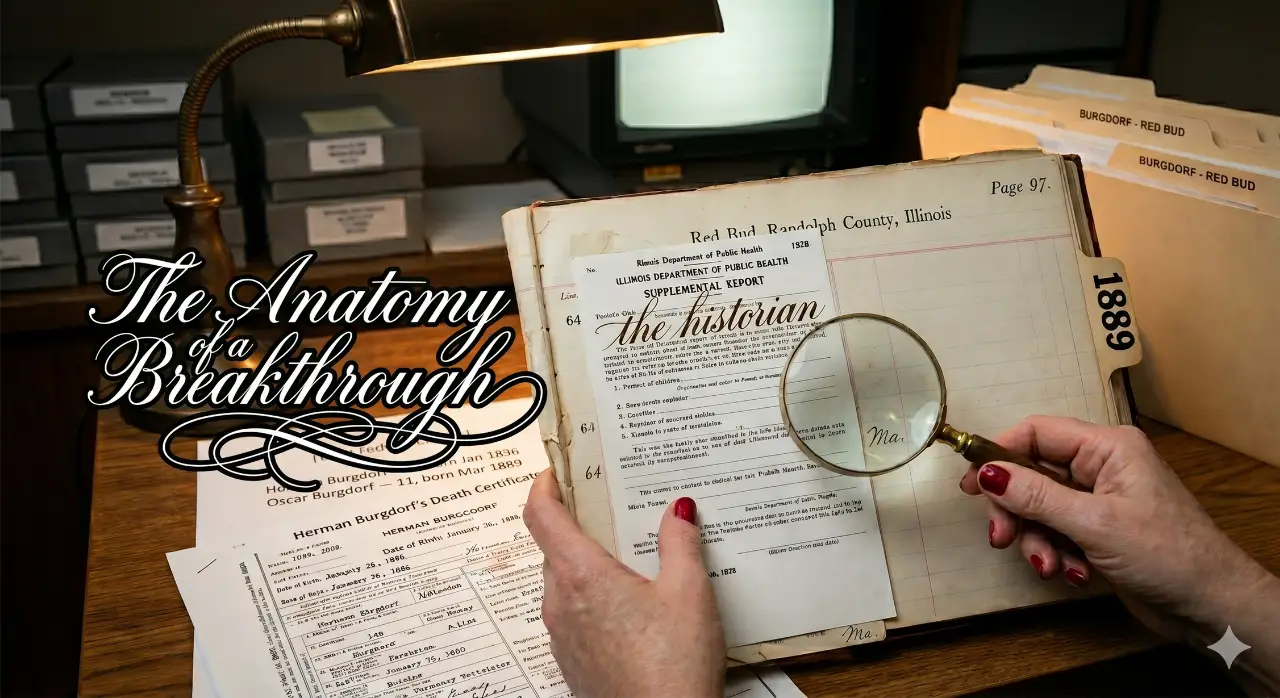
We live in an age of certificates, plastic cards, and digital footprints. We are tracked from the second we draw our first breath. But for my great-grandfather, Oscar F. Burgdorf, the world was a much more silent place. Born in March 1889 in the rural stretch of Red Bud, Illinois, his arrival wasn’t announced by a hospital computer; it was whispered in a farmhouse and, if he was lucky, etched in the family Bible.
But Bibles get lost. Pages tear. And in a house like Anna and William’s—a house that eventually held twelve children and saw the passing of so many—the specific “year” of a birth often mattered less than the survival of the child. When you are the tenth or eleventh child to pass through a mother’s arms, and that mother is also tending to the graves of your siblings, the exact calendar date of your birth becomes a luxury. For the Burgdorfs, life was measured in seasons of harvest and seasons of grief, not in digits on a page.
The Great Guess: Why Oscar Isn’t the Villain
When we judge Oscar for having three different birthdays, we are judging him by 21st-century standards. In the 1910s and 20s, most people didn’t actually “know” their true birthdays—they guessed.
Imagine Oscar standing at a recruitment desk or a post office window in St. Louis. A clerk with a fountain pen looks up and asks, “Date of birth?”
Oscar can’t pull out a phone. He can’t call his mother, Anna, who is miles away and likely struggling to keep track of a dozen different dates herself. So, he reaches into the fog of his memory. He knows he’s a few years younger than Herman. He knows he was born in the spring. He guesses April 1, 1888. It’s not a deception; it’s an anchor. It was the best answer he had at the time.
By the time he passed away, the “guess” had shifted again to January 26, 1886. This wasn’t Oscar’s fault, and it wasn’t a “scam” by his widow, Etta. In a family that had endured the deaths of so many siblings, the dates of the survivors began to merge. Herman’s birthday was a fixed point—a survivor’s date. In the end, that was the date the family clung to.
The Flight from Fear
This context of “guessing” changes how we see him running from his biological son. If Oscar didn’t even have a firm grasp on his own beginning, how could he feel stable enough to be someone else’s foundation?
Oscar had witnessed a staggering amount of death—siblings who died as infants, sisters like Louise or Ida or Carole who had their own paths, and eventually the loss of both his parents. He was a man who had seen the “Burgdorf” name carved into headstones more often than he had seen it on birth certificates.
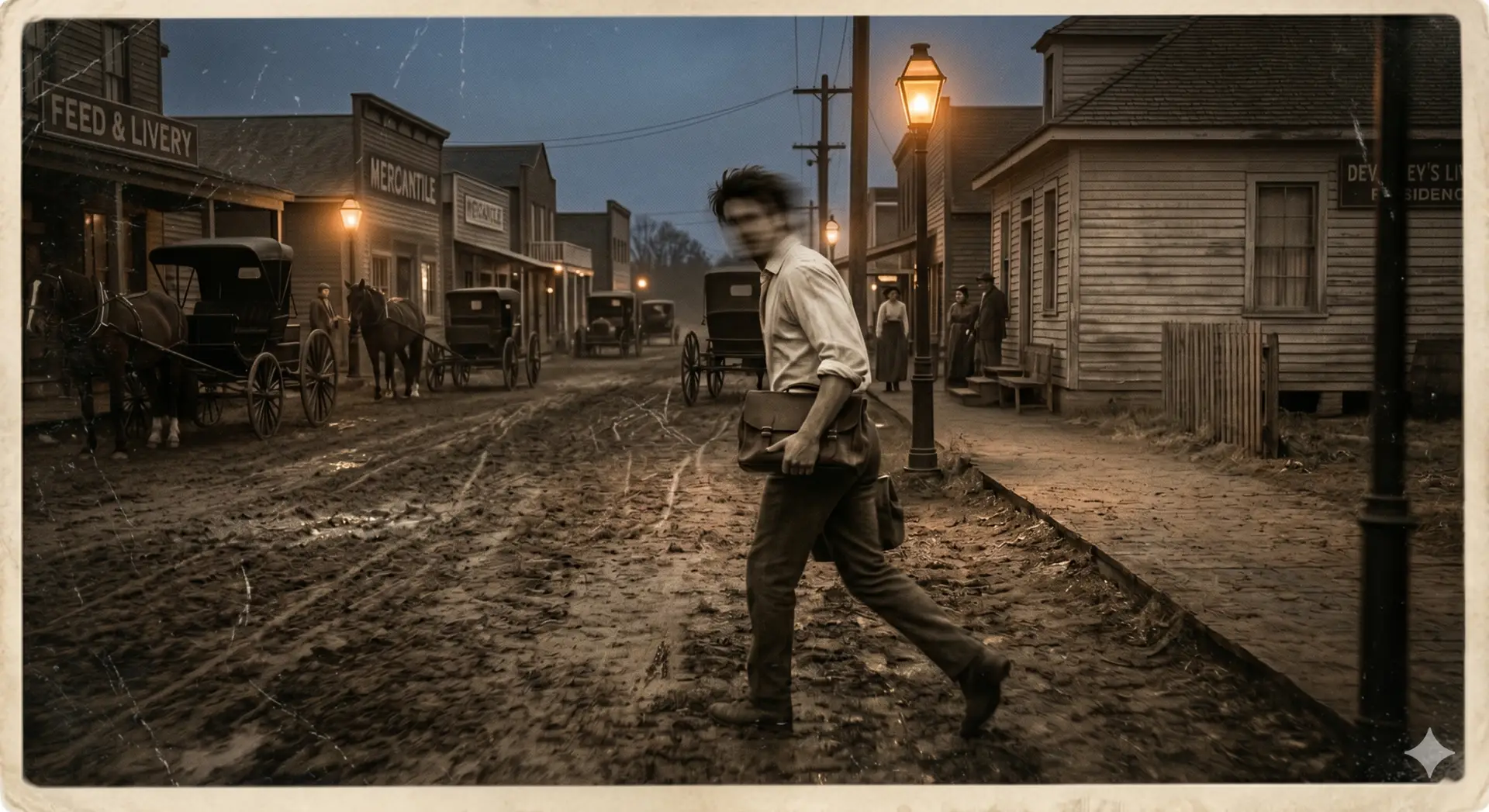
He didn’t run because he was a “bad guy.” He ran because the weight of all those deaths made the prospect of staying—of loving a son who might also be taken by the “White Plague” or a childhood fever—unbearable. He sought the anonymity of 839 S. 8th St. because in the city, he could be anyone. He could be a “Federal Ghost.” He could be a man born in 1888. He could be a man who didn’t have to look at the graves in Red Bud every Sunday.
The Final Year and the Final Peace
The tragedy of Oscar is that he finally stopped running. He found Etta. He tried to settle. But the tuberculosis that had likely haunted his childhood home found him in the Soulard tenements. After only one year of marriage, at just 39 years old, the “Great Guess” came to an end.
When he died in November 1928, he was buried with the wrong year on his paperwork, a final bit of static in a life filled with noise. But tonight, we are clearing that static.

Oscar, Set Free
By finding his true birth date of March 1889, we aren’t just “fixing a mistake.” We are offering Oscar the one thing he never had: Certainty. We are telling him: You don’t have to guess anymore. You aren’t Herman. You aren’t an 1888 ghost. You are Oscar, the son born in the spring of ’89. You are the boy Anna loved and feared for. You are the man who saw too much death but kept walking anyway.
Giving Oscar his birthday is an act of deep, genealogical mercy. It is an acknowledgment that while he may have run from his past, he never stopped being part of the family. He is finally being allowed to stand on his own two feet, with his own name, and his own time.
The soil is sifted. The guessing is over. Oscar F. Burgdorf is finally, truly known, and in being known, he is forgiven.
Post Disclaimer
Disclaimer This blog is a personal project and is for informational purposes only. It is not intended to serve as a definitive legal or historical record for anyone other than myself.


Wow, Oscar certainly had a rough life. I’m still proud that he is my grandfather. I never met the man, but I’m still proud. Thanks for finding all this out. It’ll be interesting. I feel like I’m reading a book.