The image on my Facebook feed was bathed in the kind of golden, late-afternoon light that makes everything look like a Renaissance painting. It was a simple glass jar of milk, topped with a thick layer of cream, captioned with a rallying cry for “food freedom.” The comments were a flurry of fire emojis and “Amen” responses. People spoke about “living like our ancestors,” “drinking what nature intended,” and “escaping the poison of the modern world.”
I sat at my desk, the blue light of my monitor reflecting off my glasses, and felt a familiar, cold knot in my stomach. On my other tab, I wasn’t looking at a lifestyle blog. I was looking at a 19th-century death ledger.
As a genealogist, I spend my life sifting through the soil of the past. I don’t just see names and dates; I see the gaps where lives were cut short. And while the modern world is currently obsessed with “going back to basics,” my research tells me that “the basics” were often a death sentence.
The Ghost at the Table
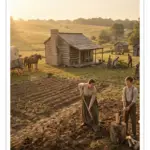
We have developed a strange, collective amnesia. We romanticize the 1800s and early 1900s as a time of pure air and untainted food, but the records tell a more brutal story.
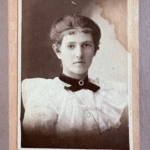
Take my great-grandfather, Oscar. In the logic of a Facebook infographic, Oscar lived the dream. He lived in a world without processed seed oils, without synthetic dyes, and without regulated, pasteurized milk. Everything he consumed was “raw” and “natural.”
And yet, Oscar died at thirty-nine years old.
He didn’t die of a “lifestyle disease” or a modern allergy. He was consumed by tuberculosis. In the early 20th century, bovine tuberculosis—transmitted through the milk of infected cows—was a silent predator in the American kitchen. When we talk about “raw milk” today, we talk about enzymes and probiotics. When Oscar’s generation talked about milk, they were talking about a gamble. Every glass was a potential carrier of TB, brucellosis, or scarlet fever.
When I look at the census records and see a family with six children in 1900, and then see that same family with only three children in 1910, I am looking at the reality of “natural” living. Those children didn’t die because of “chemicals.” They died because nature is indifferent. They died because bacteria doesn’t care about your “food freedom.”
The Paradox of Modern Health
We are living in a historical anomaly. We are the first generations of humans who have the luxury of being “worried” about our food.
It is a profound irony: we point to rising rates of food allergies or vaccine injuries—valid concerns that deserve scientific attention—and we use them as an excuse to sprint backward toward a past that was objectively more dangerous. We say our food is “poisoning” us, yet we are living decades longer than our ancestors. We are taller, we are stronger, and our infant mortality rates have plummeted.
We have forgotten that we aren’t “healthier” by accident. We are healthier because we applied science to our survival. Pasteurization wasn’t a plot by “Big Dairy” to ruin the flavor of milk; it was a desperate, hard-won victory against the “brain-eating” diseases and bacterial infections that used to empty out cradles.
The Danger of the “Aesthetic”
The danger of the raw milk movement—and many movements like it—is that it prioritizes an aesthetic over evidence. We like the idea of the farm-to-table lifestyle because it feels intentional and grounded. But nature isn’t an aesthetic. Nature is a battlefield.
When I see people advocating for unregulated, raw milk for children, I think about the science we are choosing to ignore. We have mapped the human genome, we have eradicated smallpox, and we have mastered the heat-treatment of dairy to ensure that a glass of milk is just a glass of milk—not a game of Russian Roulette with a child’s neurological health.
Why would we ever want to go back? Why would we trade the safety of 2026 for the cemetery records of 1900?
- Historical Mortality: In 1917, bovine-origin M. bovis (Tuberculosis) was estimated to be responsible for approximately 15,000 deaths in the U.S. alone—three times more than all food-borne illness deaths today combined.
- The Infant Toll: Before pasteurization became common, milk-borne pathogens like “summer diarrhea” and tuberculosis contributed to an infant mortality rate that was 30 to 60 times higher than modern rates.
- Modern Risk: Between 2009 and 2014, unpasteurized dairy products were found to cause 840 times more illnesses and 45 times more hospitalizations than pasteurized products.
- The Nutritional Reality: Peer-reviewed studies confirm that while minor denaturation of whey proteins occurs during pasteurization, it has no impact on the nutritional quality or protein function for the consumer.
- Berge, A. C., & Baars, T. (2020). Raw milk producers with high levels of hygiene and safety. Epidemiology and Infection, 148, e14. https://doi.org/10.1017/s0950268820000060
- Centers for Disease Control and Prevention. (2025, July 24). Outbreak of Salmonella Typhimurium infections linked to commercially distributed raw milk — California and four other states, September 2023–March 2024. Morbidity and Mortality Weekly Report (MMWR). https://www.cdc.gov/mmwr/volumes/74/wr/pdfs/mm7427-H.pdf
- Gould, J. B. (2018). A brief history of milk hygiene and its impact on infant mortality from 1875 to 1925 and implications for today: A review. Journal of Perinatology, 38(10), 1239-1245. https://pubmed.ncbi.nlm.nih.gov/30234385/
- Lu, M., Shrestha, S., & Shrestha, S. (2024). Effect of heat pasteurization and sterilization on milk safety, composition, sensory properties, and nutritional quality. Foods, 13(18), 2883. https://pmc.ncbi.nlm.nih.gov/articles/PMC12026572/
- ResearchGate. (2012). Milk consumption and tuberculosis in Britain, 1850-1950. https://www.researchgate.net/publication/233762439_Milk_Consumption_and_Tuberculosis_in_Britain_1850-1950
- Washington State Department of Health. (2024, April 3). 2024 E. coli outbreak linked to raw milk consumption. https://doh.wa.gov/you-and-your-family/illness-and-disease-z/foodborne-illness/outbreaks/2024-e-coli-raw-milk
Post Disclaimer
Disclaimer This blog is a personal project and is for informational purposes only. It is not intended to serve as a definitive legal or historical record for anyone other than myself.

Leave a Reply